
The pharmaceutical industry operates on precision, compliance, and trust. At the heart of every finished medicine lies a complex and highly regulated network known as the pharma API supply chain. Active Pharmaceutical Ingredients (APIs) are the core components that give medicines their therapeutic effect, and ensuring their quality, safety, and availability is critical for global healthcare systems.
Understanding how APIs move from raw materials to finished medicines helps pharmaceutical companies, formulators, regulators, and healthcare stakeholders make informed decisions. This article explains the pharmaceutical API supply chain step by step, highlighting key processes, challenges, and best practices that ensure uninterrupted and compliant medicine production.
What Is an API in Pharmaceuticals?
An Active Pharmaceutical Ingredient (API) is the biologically active component in a drug product responsible for its intended therapeutic action. Whether it is an antibiotic, immunosuppressant, analgesic, or CNS drug, the API determines the efficacy and safety of the final formulation.
APIs can be:
- Synthetic APIs – chemically manufactured through multi-step synthesis
- Biotech APIs – derived using biological processes such as fermentation or recombinant DNA technology
The API supply chain ensures that these substances meet strict quality, regulatory, and traceability standards before reaching drug manufacturers.
Overview of the Pharma API Supply Chain
The pharmaceutical API supply chain can be broadly divided into the following stages:
- Raw material sourcing
- API manufacturing
- Quality control and testing
- Regulatory compliance and documentation
- Packaging and storage
- Global distribution to formulation units
Each stage is interdependent, making supply chain coordination essential to prevent shortages, quality failures, or regulatory non-compliance.
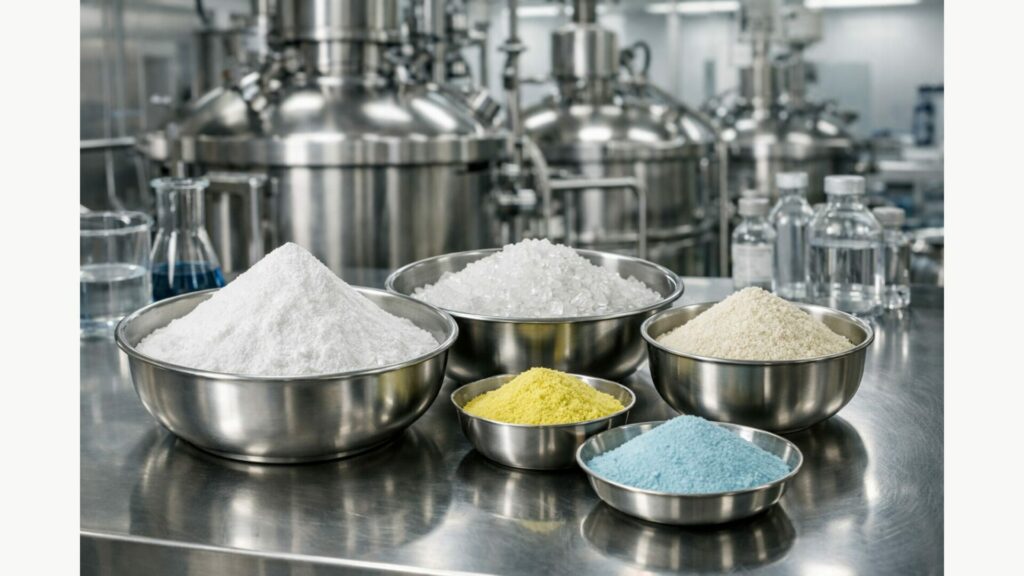
1. Raw Material Sourcing: The Foundation of API Quality
The API supply chain begins with raw materials, which may include chemical intermediates, solvents, reagents, or biological substrates.
Key Considerations in Raw Material Procurement
- Supplier qualification and audits
- Material traceability
- Compliance with pharmacopeial standards
- Consistency between batches
Raw materials must be sourced from approved vendors that follow Good Manufacturing Practices (GMP) or equivalent quality systems. Any deviation at this stage can compromise the final API quality.
Given increasing regulatory scrutiny, pharmaceutical companies now prioritize secure and diversified sourcing strategies to reduce dependency on single regions.
2. API Manufacturing: From Chemistry to Controlled Production
Once raw materials are approved, they enter the API manufacturing process, which may involve complex chemical reactions, purification steps, and crystallization.
Key API Manufacturing Processes
- Chemical synthesis (multi-step reactions)
- Fermentation or enzymatic processes
- Isolation and purification
- Drying and milling
- Particle size control
Manufacturing facilities must comply with international GMP standards, including:
- Controlled environments
- Validated equipment
- Trained personnel
- Documented procedures
Batch consistency is critical, especially for APIs used in chronic or life-saving therapies. Even minor variations can impact drug bioavailability or stability.
3. Quality Control and Analytical Testing
Quality control (QC) is one of the most critical stages in the pharmaceutical API supply chain. APIs undergo rigorous testing before release.
Common API Quality Tests
- Identity testing (IR, HPLC, NMR)
- Assay and potency
- Impurity profiling
- Residual solvent analysis
- Microbial limits (where applicable)
- Stability testing
These tests ensure compliance with USP, EP, BP, or IP standards, depending on the target market. Only APIs that meet predefined specifications are approved for commercial distribution.
4. Regulatory Compliance and Documentation
Pharma APIs are among the most regulated chemical substances globally. Regulatory compliance ensures patient safety and market access.
Essential Regulatory Documents
- Drug Master File (DMF)
- Certificate of Analysis (CoA)
- GMP certificates
- Stability data
- Safety Data Sheets (SDS)
- Regulatory declarations (CEP, TSE/BSE)
API suppliers must align with authorities such as:
- US FDA
- EMA
- WHO
- CDSCO
- PMDA
Well-maintained documentation ensures faster approvals, smoother audits, and fewer disruptions for formulation companies.
5. API Packaging and Storage
After quality approval, APIs are packaged to preserve integrity during storage and transit.
Best Practices in API Packaging
- Use of HDPE drums, fiber drums, or aluminum containers
- Double-liner systems for contamination prevention
- Clearly labeled batch and traceability information
- Tamper-evident sealing
Storage conditions such as temperature, humidity, and light exposure are carefully controlled, particularly for sensitive APIs.
6. Global Distribution and Logistics
The final stage of the pharmaceutical API supply chain involves transportation to formulation units or contract manufacturers across the globe.
Challenges in API Logistics
- Cold chain requirements
- Customs clearance delays
- Regulatory inspections at ports
- Geopolitical and supply disruptions
Reliable API suppliers invest in logistics planning, compliant shipping partners, and inventory buffering to ensure uninterrupted supply to pharmaceutical manufacturers.
Key Challenges in the Pharma API Supply Chain
Despite advancements, the API supply chain faces several challenges:
- Overdependence on limited manufacturing regions
- Rising regulatory expectations
- Supply chain disruptions due to global events
- Price volatility of raw materials
- Increasing demand for niche and high-potency APIs
To mitigate these risks, pharmaceutical companies are adopting supplier diversification, digital traceability systems, and strategic partnerships.
Importance of API Suppliers in the Value Chain
API suppliers play a crucial role as the bridge between manufacturers and drug formulators. Beyond supplying material, they support:
- Regulatory submissions
- Technical documentation
- Batch consistency assurance
- Market-specific compliance
Companies like Thykn (India) International operate within this critical space, focusing on supplying quality pharmaceutical APIs to global customers while ensuring documentation readiness, traceability, and regulatory alignment. By working closely with manufacturing partners and formulation companies, API suppliers help maintain continuity across the pharma value chain.
Future Trends in Pharmaceutical API Supply Chains
The pharma industry is evolving rapidly, and API supply chains are adapting to new demands.
Emerging Trends
- Increased focus on supply chain transparency
- Shift toward regional manufacturing hubs
- Digitalization of quality and traceability records
- Growing demand for specialty and high-potency APIs
- Sustainability-driven sourcing and manufacturing
These trends aim to create resilient, compliant, and patient-centric supply networks.
Conclusion
The pharmaceutical API supply chain is a carefully orchestrated system that transforms raw materials into life-saving medicines. From sourcing and manufacturing to quality control and global distribution, every step demands precision, compliance, and accountability.
As regulatory expectations rise and global demand grows, strong API supply chain management becomes a competitive advantage rather than a backend operation. Reliable API suppliers, supported by transparent processes and robust documentation, play a pivotal role in ensuring medicines reach patients safely and efficiently.
Understanding this supply chain empowers pharmaceutical stakeholders to build better partnerships, reduce risks, and contribute to a more resilient global healthcare ecosystem.